
When to Sell a Luxury Villa: Understanding the Timing of the International Buyer on the Costa Blanca North
The best time to sell a luxury villa on the Costa Blanca North depends largely on the behaviour of international buyers. In areas such as Jávea, Moraira, Benissa and Altea, foreign purchasers represent a significant share of the market. Most begin exploring properties in spring, often returning in autumn to make final decisions. Understanding this seasonal rhythm helps sellers align their listing with the periods when motivated buyers are actively viewing homes.
Selling a luxury villa is rarely a purely financial decision.
There is usually history in the walls. Years of mornings on the terrace, particular views that mark the seasons, perhaps the slow shaping of a garden that finally feels mature.
Owners know this.
Yet when the time eventually arrives to sell, one practical question tends to dominate the conversation:
When is the right moment to bring the property to market?
On the Costa Blanca North, timing matters more than many sellers expect. Not because the market moves in dramatic cycles, but because the buyer profile here is unusual. A large proportion of purchasers are international. They arrive according to travel rhythms, seasonal patterns, and lifestyle motivations that are very different from the domestic Spanish housing market.
Understanding that rhythm is often the difference between a villa that quietly finds its buyer and one that sits on the market longer than necessary.
This article explores that timing in detail. The seasonal structure of the Spanish housing market, the behaviour of international buyers in Alicante province, and the particular dynamics of the €1M+ villa segment across towns such as Jávea, Moraira, Benissa, Altea and Denia.
Because in this part of the Mediterranean, selling well is not simply about price. It is about aligning your property with the moment the right buyer is ready to see it.
The Costa Blanca North Is an International Market
One fact shapes everything that follows.
Alicante province is one of the most international residential markets in Europe. Foreign buyers represent a remarkable share of transactions compared with most Spanish regions.
According to market analysis reported by Idealista, foreign purchasers accounted for approximately 45.7 percent of all home purchases in Alicante province in 2025, the highest proportion in Spain.
This statistic is not simply interesting background data. It fundamentally alters how the market behaves.
In many Spanish cities the housing market moves primarily according to domestic factors such as employment patterns, mortgage availability, or local demographic shifts.
Costa Blanca North operates differently.
The buyers who ultimately purchase villas in places such as Jávea, Moraira or Benissa often arrive from outside Spain. The Netherlands, Belgium, Germany, Scandinavia, Britain and increasingly, the United States.
International Demand by Municipality (Luxury Segment)Source:
Municipality | Source 1 | Source 2 | Source 3 |
|---|---|---|---|
Calpe | Germany (28.8%) | Netherlands (28.0%) | USA (13.2%) |
Moraira | Netherlands (56.6%) | Belgium (48.9%) | Germany (36.7%) |
Benitachell | Netherlands (13.6%) | Germany (9.7%) | Poland (7.8%) |
Altea | Netherlands (13.3%) | Belgium (10.6%) | United Kingdom (9.2%) |
They are not typically purchasing under immediate pressure. Most are second home buyers or lifestyle movers. Some are semi retired entrepreneurs. Others are families rebalancing their lives between Northern Europe and the Mediterranean.
Which means they follow a different calendar.
Flights. School holidays. winter escapes. property research trips. second visits.
The purchase process often unfolds slowly and thoughtfully.
And that changes the ideal moment to sell.
The Wider Spanish Housing Market Has Its Own Rhythm
Before looking specifically at the luxury segment, it is helpful to understand the general structure of the Spanish property market.
Spain publishes detailed monthly housing transaction data through the National Statistics Institute. The series tracks all property completions across the country and by province.Recent figures show the market continuing to perform strongly. Spain recorded more than 714,000 property transactions in 2025, an increase of roughly 11.5 percent compared with the previous year.
Yet these transactions are not evenly distributed throughout the year.
Like most Mediterranean markets, Spain moves through a recognisable seasonal pattern.
A simplified interpretation looks like this:
Period | Typical Market Activity | Context |
January to February | Lower transaction volume but serious buyers | Early planning, relocation decisions |
March to June | Strongest viewing season | Travel season begins, homes present well |
July to August | High tourism, fewer transactions | Holiday period |
September to October | Second strong market window | Buyers return after summer |
November to December | Quiet but focused | Year end decisions, relocations |
This pattern matters because most property purchases do not occur immediately after a viewing.
A typical buyer journey might look like this:
First visit in spring
Research phase through early summer
Return visit in autumn
Completion late in the year
So the transaction statistics you see in the winter months often reflect decisions that began earlier.
This is particularly true in the luxury market.
The Luxury Segment Behaves Differently
Homes priced above €1 million form a distinct layer of the market.
Across Spain, Idealista reported more than 45,000 homes listed above €1 million in late 2024, with several provinces dominating that segment.
Alicante sits prominently within that group, alongside Madrid, Málaga and the Balearic Islands.
But even within Alicante the geography of luxury demand is uneven.
Some coastal enclaves attract extraordinarily high levels of international interest.
In some prime locations along the Costa Blanca North coast, foreign buyers represent well over 60 percent of demand in the luxury segment.
That level of international influence shapes everything from pricing behaviour to the rhythm of viewings.
Which leads us back to timing.
The Spring Window: When the Market Begins to Move
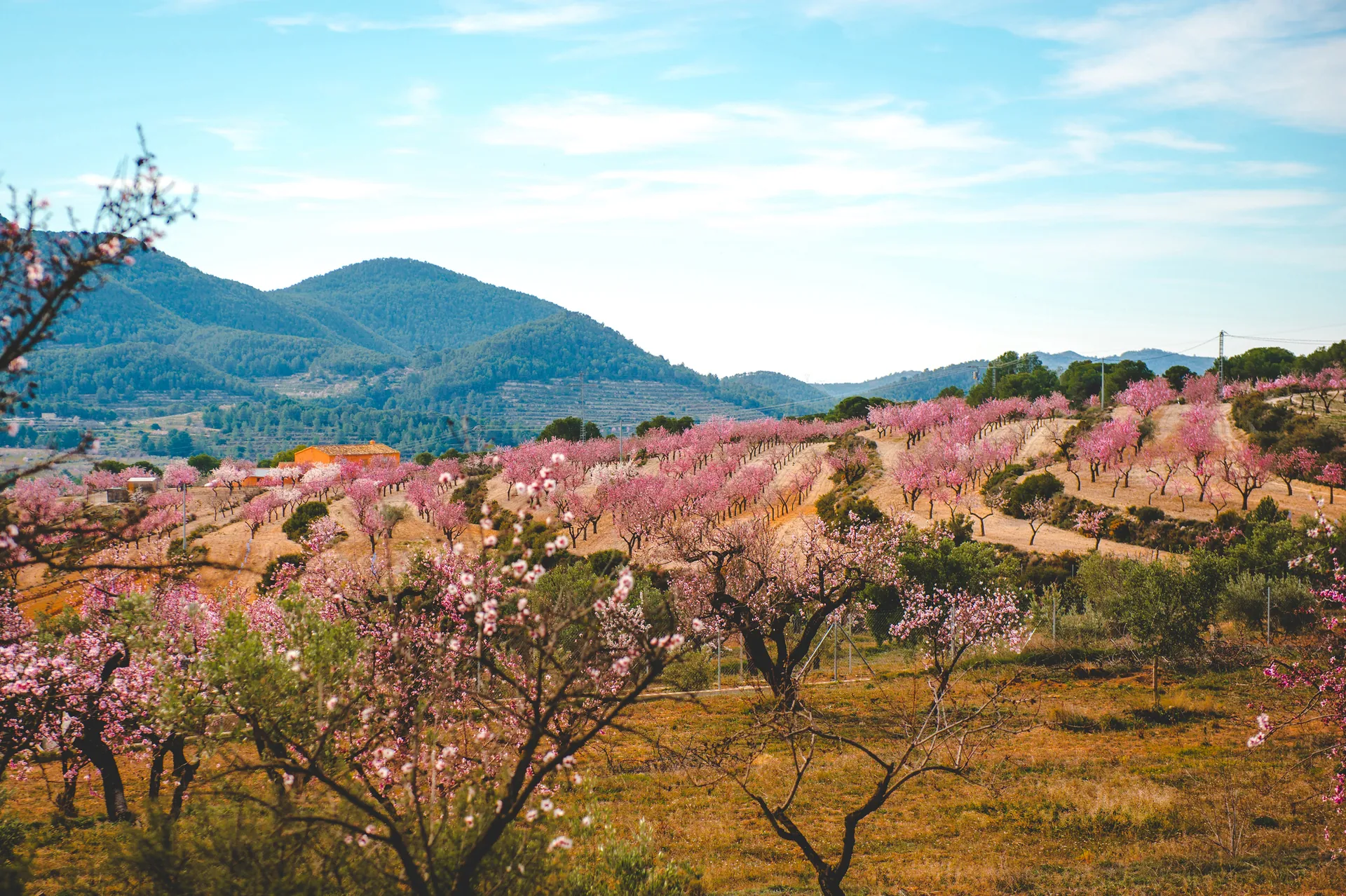
Ask experienced agents across the region when villas tend to attract the strongest interest, and the answer is remarkably consistent.
Spring.
Not simply because the weather improves. The explanation runs deeper.
Northern European buyers often reach the end of winter with a renewed desire for sunlight and outdoor living. Travel patterns begin to increase. Airlines restore seasonal routes. Property viewing trips start to appear in the calendar.
And the villas themselves begin to show well.
Gardens recover from winter. Pools are open again. Terraces feel usable rather than aspirational.
A contemporary villa overlooking the sea in Benissa Costa, for example, often reveals its character most clearly in April or May.
Morning light across limestone terraces. A quiet horizon before the summer haze arrives. Outdoor kitchens actually in use rather than imagined.
Buyers experience the house as a place to live.
That emotional clarity matters.
In our experience across the Costa Blanca North, many of the most decisive viewings occur between late March and early June. Last year we saw three sea view villas in Moraira receive their strongest interest between April and mid May, after relatively quiet winter months. It looks as though this year the pattern is repeating.
Not every visit results in an immediate offer. Often the buyer leaves with a sense of possibility, then returns later in the year.
But spring is frequently the moment when the relationship between buyer and property begins.
Summer Visibility Versus Summer Decision Making
Summer creates a paradox in the Mediterranean property market.
On one hand, the coast is at its busiest. Airports are full. Restaurants are alive. Beaches are crowded with visitors who may never have experienced the region before.
On the other hand, summer is not always the moment when buyers make clear decisions.
Families are travelling together. Social calendars are dense. Temperatures can climb well above thirty degrees.
Viewing properties becomes more complicated.
A villa that felt balanced and serene in spring may feel different in August heat.
This does not mean summer is a poor time to sell.
Quite the opposite.
Summer generates exposure. Many buyers first encounter the Costa Blanca during a holiday visit. They notice architecture they admire. They drive through neighbourhoods they had not previously considered.
A seed is planted.
But the decision itself often arrives later.
That is the part most sellers overlook.
Autumn: The Quiet Second Season
September and October form what many local professionals consider the second serious season of the property market.
Something subtle changes after the summer months.
Tourism recedes slightly. The heat softens. Travel becomes easier again. And many potential buyers return with clearer intentions.
A typical pattern might unfold like this.
A Dutch couple visits Jávea in July. They spend most of the week on the beach with their children. But one afternoon they drive into the hills above Benitachell and glimpse a property that captures their attention.
They return home.
Over the following weeks they research the region more carefully. They speak with friends who own homes in Spain. Perhaps they arrange financing or discuss the purchase with family.
Then, in September or October, they return for a focused viewing trip.
Now the conversation changes.
Offers begin to appear.
This second wave of buyer activity is one reason autumn listings often perform better than expected.
The market may feel quieter. Yet the visitors who arrive tend to be highly motivated.
How the €1M+ Buyer Actually Decides
Luxury purchases rarely follow a single visit model.
Instead, the decision often unfolds across several stages.
A simplified version looks like this.
Discovery
The buyer encounters the Costa Blanca for the first time or begins to explore it seriously. This may occur during a holiday or through online research. They may have visited the Costa de Sol or the Balearic Islands and realized that for the quieter, more private experience, the Costa Blanca has a lot more to offer.
Exploration
They visit several towns. Jávea, Moraira, Altea, perhaps even further north towards Dénia or inland towards the Jalón Valley.
They begin to understand micro locations. The difference between sea view terraces and valley views. Between architectural villas and traditional fincas.
Comparison
Buyers frequently compare the Costa Blanca with other Mediterranean destinations. Mallorca. The south of France. Tuscany. Algarve.
Return Visit
This is the decisive stage. They return specifically to view a shortlist of properties. For example, a Belgian family we worked with first viewed properties during a summer visit to Altea. They returned in October with a short list and completed before Christmas.
Purchase
Legal due diligence begins. Contracts are negotiated. Completion often occurs several months later.
Understanding this sequence helps explain why timing a listing matters.
If your villa enters the market during the moment buyers are exploring the region, it has a far better chance of appearing on their shortlist.
Preparing a Villa for the Market
Sellers often ask a practical question.
If spring is such an important viewing season, when should the preparation begin?
The answer is earlier than most expect.
A thoughtfully prepared villa rarely appears on the market overnight. Photography, legal documentation, presentation and pricing all require careful planning.
A useful guideline looks like this.
If You Plan to Sell in Spring
Month | Preparation Step |
January | Legal documents, property checks |
February | Photography and marketing preparation |
March | Launch property listing |
April to June | Peak viewing period |
If You Plan to Sell in Autumn
Month | Preparation Step |
July | Quiet preparation stage |
August | Photography before autumn market |
September | Launch listing |
September to October | Focused buyer visits |
These schedules are not rigid rules.
But they reflect the rhythm of the market.
Launching a property at the right moment often produces more serious viewings than listing it randomly during the year.
Location Still Matters
Timing alone does not sell a property.
Location remains the foundation of the Costa Blanca luxury market.
Consider three examples.
A modern architectural villa on the slopes of Montgó in Jávea offers expansive views across the valley towards the sea. Wide glass panels capture evening light. Interiors often combine polished concrete, oak and natural stone. Buyers drawn to contemporary design respond strongly to this setting.
In Benissa Costa, villas positioned above small coves such as Cala Advocat or Baladrar offer a different atmosphere. Terraces descend gradually towards the sea. Gardens incorporate Mediterranean planting. The architecture may blend traditional and modern elements.
Then there are the inland properties.
A restored finca in the Jalón Valley, surrounded by vineyards and almond groves, appeals to a quieter lifestyle. Dutch and Belgian buyers often find these landscapes deeply attractive. Space, privacy, and the feeling of rural authenticity.
Each of these locations attracts a slightly different buyer.
And each buyer arrives according to their own rhythm.
Why Some Villas Sell Quickly
Occasionally a luxury villa sells almost immediately.
This usually happens when several elements align at once.
The property enters the market just as a motivated buyer begins their search. The location fits precisely with their expectations. The architecture resonates with their taste.
Timing plays a subtle role in this.
If a property appears during the narrow window when the right buyer is actively exploring the region, the process can move surprisingly quickly.
But if the listing misses that window, the same buyer might not return for months.
This is why sellers sometimes experience the strange sensation that interest suddenly appears after a quiet period.
The market did not change dramatically.
The buyer simply arrived.
Signals That the Market Is Right
Experienced agents, like Grupo Garcia, tend to notice certain signals before activity increases.
Enquiries from Northern Europe begin to rise. Direct flights increase. Viewing trips appear more frequently in the calendar.
At the same time, the number of available villas in a specific price range may decrease.
Scarcity becomes visible.
This combination often precedes a strong selling period.
It is not always obvious from national statistics. But locally, the shift can be felt.
A Final Thought for Sellers
Selling a luxury villa on the Costa Blanca North is rarely about rushing.
The market here rewards patience, preparation and timing.
Buyers arrive from different countries with different expectations. Some are searching for architectural clarity. Others for privacy. Many simply want a place where the Mediterranean rhythm of life feels natural.
The moment when that buyer encounters the right property is difficult to predict precisely.
But the patterns are visible.
Spring brings discovery.
Summer creates awareness.
Autumn produces decisions.
And in a region where lifestyle matters as much as investment, that alignment between property and person is often what makes the sale quietly inevitable.
If you are considering selling a villa on the Costa Blanca North, a well-timed strategy can make a meaningful difference. Speak with Grupo Garcia for a confidential appraisal and a clear view of when your property is most likely to meet the right international buyer.
FAQs
When is the best time of year to sell a luxury villa on the Costa Blanca North?
The most active viewing period typically runs from March to early June, when international buyers travel to explore the region and properties present well after winter. A second strong window often appears in September and October, when buyers who first discovered the area during summer return with clearer purchase intentions.
Why does timing matter more in the luxury property market?
Luxury properties attract a high proportion of international buyers. Many travel specifically to view homes, often visiting several Mediterranean regions before deciding where to purchase. This means demand follows travel seasons and lifestyle patterns rather than only financial conditions, making the timing of a listing more significant than in purely domestic markets.
Do luxury villas sell during the summer months?
Yes, but summer tends to generate awareness rather than immediate decisions. Many visitors first encounter the Costa Blanca while on holiday and begin researching property during that time. Serious negotiations and purchases often occur later, particularly in early autumn when buyers return for more focused viewing trips.
How long does it usually take to sell a luxury villa in this region?
The timeline varies depending on price, location and presentation, but luxury purchases often unfold over several months. Buyers may visit the region once to explore, return later to view specific properties, and then complete the purchase after legal due diligence. For this reason, aligning the listing with the periods when international buyers are travelling can shorten the selling process.
Which areas of the Costa Blanca North attract the strongest luxury demand?
Prime areas with consistent international demand include Jávea, Moraira, Benissa Costa and parts of Altea. Inland locations such as the Jalón Valley also attract buyers seeking privacy and landscape. According to data reported by Idealista, several Alicante locations show foreign demand exceeding 60 percent in the luxury segment.
Source: Idealista
Should I prepare my villa before listing it in spring or autumn?
Ideally, preparation begins two to three months before launch. This allows time for photography, documentation and presentation improvements such as landscaping or terrace preparation. A villa that enters the market fully prepared during the spring viewing season often attracts stronger early interest.
Does the Costa Blanca luxury market depend heavily on foreign buyers?
Yes. Alicante province consistently records one of the highest proportions of international property buyers in Spain. In recent market reports, foreign purchasers accounted for around 45 percent of all transactions in the province.
Is spring or autumn better for selling a villa with sea views?
Both seasons work well. Spring often produces the largest number of first viewings, while autumn frequently brings buyers returning with clear purchase intentions. For many luxury properties the most effective strategy is to launch in spring and allow interest to develop through both seasons.