
The 5 best luxury homes with sea views on the Costa Blanca
A curated selection of five design-led luxury villas with sea views across Jávea, Altea, and Calpe. Each property is framed through architecture, light, and long-term lifestyle value, offering insight for Northern European buyers seeking privacy, coherence, and considered coastal living.
There is usually a moment, somewhere between the first scroll and the second viewing, when the criteria begin to shift.
At first, it is simple enough. Sea views. Privacy. Clean architecture. Something modern, but not cold. Somewhere that feels open, but not exposed.
Then something quieter takes over. The way a terrace holds the afternoon light. The orientation of the living space, not just towards the sea, but towards how you actually live. The difference between a house that shows well… and one that settles.
That distinction matters more than most buyers expect.
What follows is not a list in the conventional sense. It is a considered sequence, moving along the coastline from Jávea to Altea and on to Calpe. Different landscapes. Different architectural responses. Each with its own logic.
If you are looking at the Costa Blanca with a long-term view in mind, this is where things begin to clarify.
Jávea: Where the Landscape Still Leads the Architecture
There is a reason many Northern European buyers begin here.
Jávea does not feel constructed in the same way some coastal towns do. The Montgó sits behind it. The coastline breaks into coves rather than long, continuous beaches. The terrain resists uniformity. And because of that, the best homes tend to follow the land rather than dominate it.
You see it in orientation. In how terraces step rather than flatten. In how materials soften the line between interior and exterior.
If you are exploring further, you can see the broader market in Jávea here.
But a few properties stand out for how they handle all of this.
Villa Sagitta, Jávea
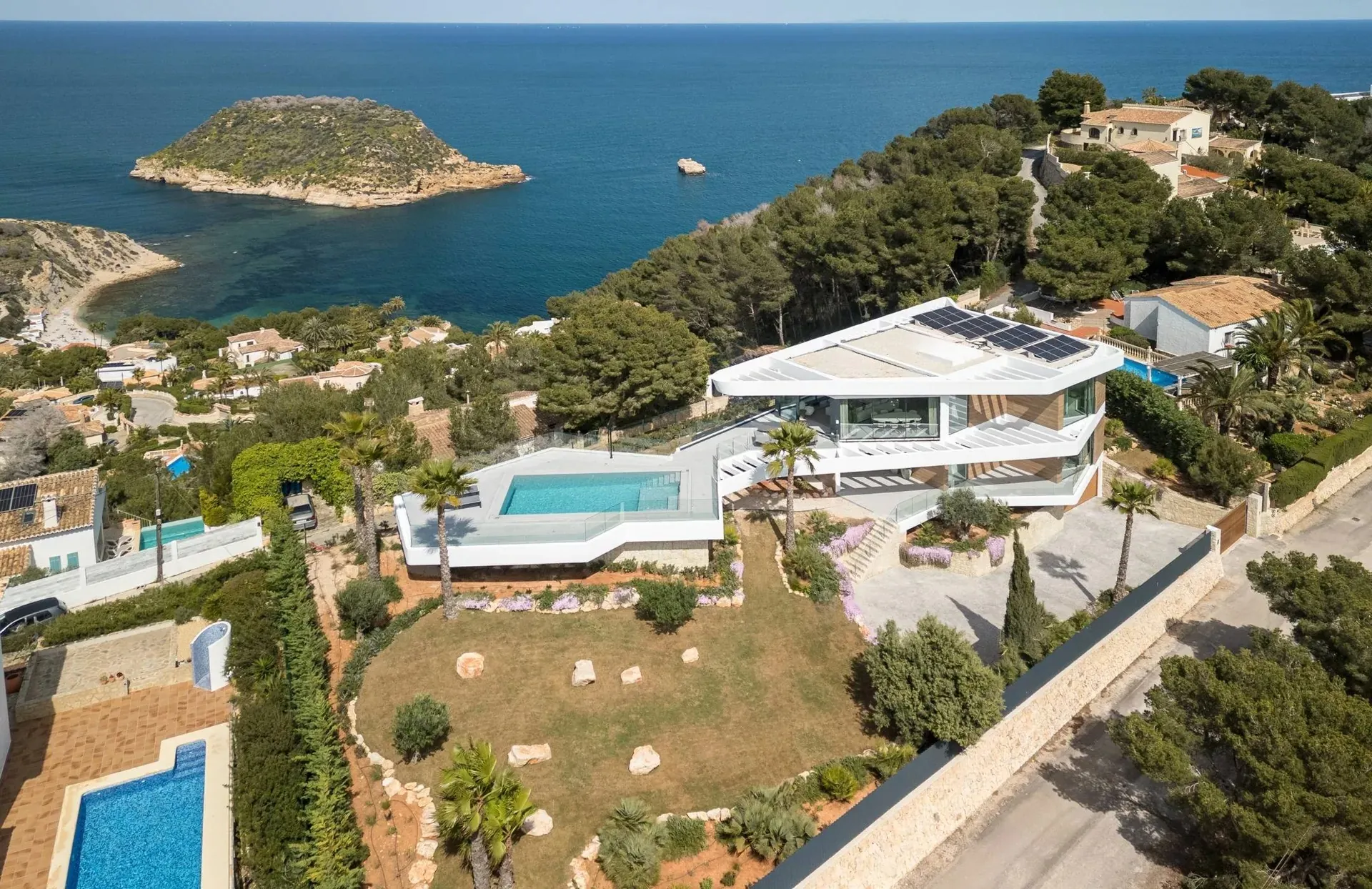
Some homes in Jávea try to frame the view. Others open to it completely.
Villa Sagita leans towards the latter.
The architecture is clean, but not rigid. Lines are horizontal, allowing the horizon to carry the composition. The living spaces extend outward without interruption, which sounds obvious, but is often poorly executed. Here, the transitions feel deliberate. Sliding glass disappears. Terraces feel like an extension of the interior, not an addition.
What becomes noticeable after a while is the balance. The house does not compete with the view. It holds it.
Morning light enters gently from the east, while the afternoon settles across the terrace rather than directly into the living space. That matters, particularly if you are spending extended periods here rather than visiting occasionally.
For buyers coming from the Netherlands or Belgium, where light behaves differently, this kind of orientation is often underestimated at first. Later, it becomes essential.
This is a home that works quietly. No excess. No unnecessary gestures. Just a clear relationship between space, light, and horizon.
Villa Portichol, Jávea
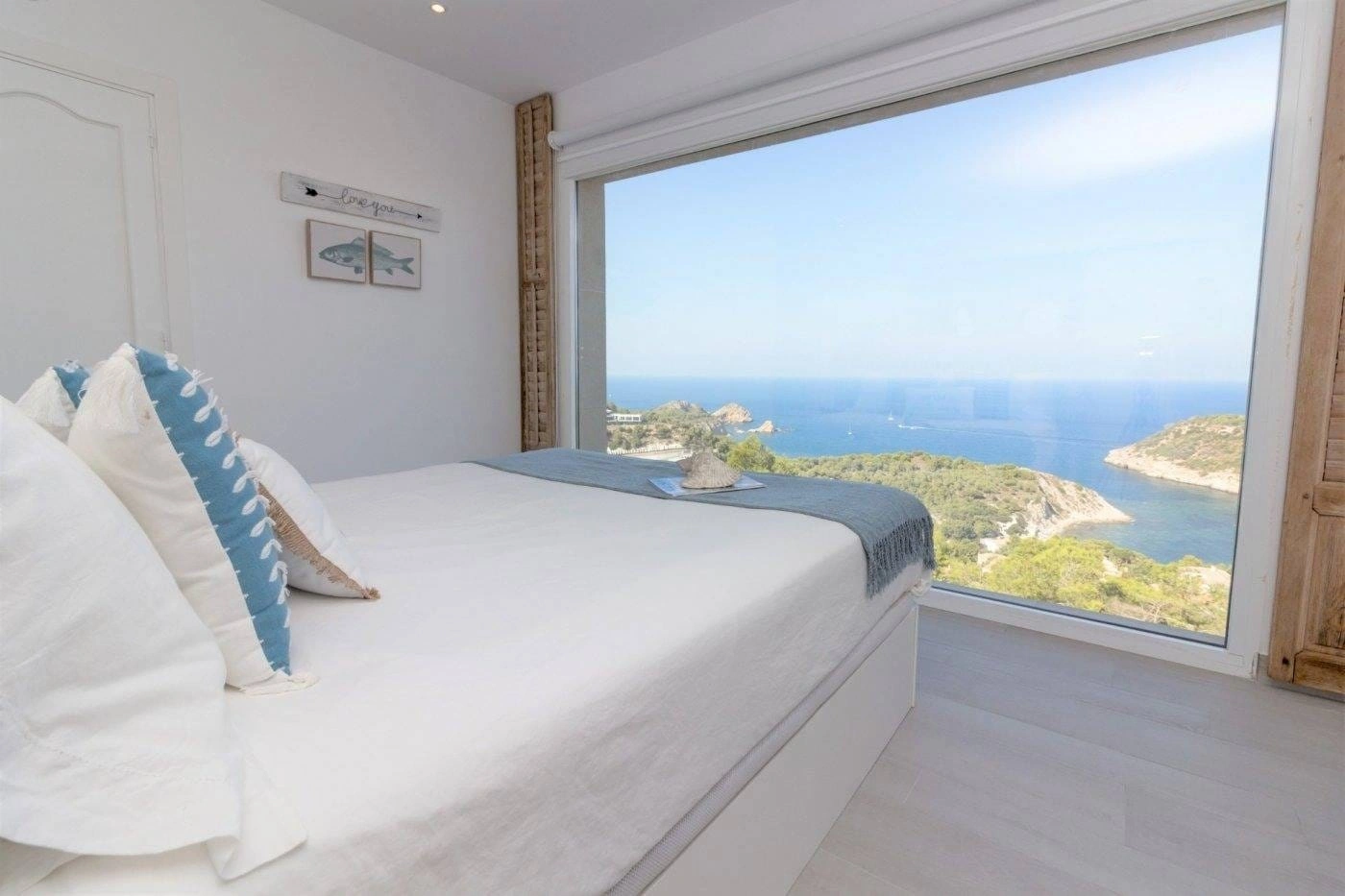
Renovated homes can be unpredictable. Sometimes the original structure resists the update. Sometimes the intervention is too heavy.
With Villa Portichol, the balance feels more resolved.
Portichol itself has a particular character. Less polished than parts of Altea, more rugged, more exposed. The sea is closer, visually and physically. The light is sharper. The wind can be stronger in certain seasons.
This villa acknowledges that.
Materials feel more tactile. Surfaces are less reflective, more grounded. The renovation has not tried to erase the original identity of the property but has refined it. Spaces are opened where needed, but there is still a sense of enclosure, which becomes important in a location like this.
The terraces are positioned to offer protection as well as view. That is something many buyers overlook until they experience a full year on the coast.
Inside, the layout supports a slower rhythm. Not overly open. Not compartmentalised. Somewhere in between, which tends to work better for longer stays or full-time living.
If Sagitta is about openness, Portichol is about control. A more sheltered relationship with the sea. More introspective.
Altea: Elevation, Structure, and a Different Kind of Order
Moving south, the tone shifts.
Altea is more structured. The hills are steeper, the urban planning more defined, the architecture often more assertive. Views are higher, more expansive, sometimes more dramatic.
For some buyers, this feels immediately right. For others, it takes a moment.
What Altea offers, when done well, is clarity. Strong lines. Defined volumes. A sense of elevation, both physically and architecturally.
You can explore more luxury villas in Altea here.
Within that context, two properties illustrate different interpretations of the same landscape.
Luxury Villa in Altea with Sea Views
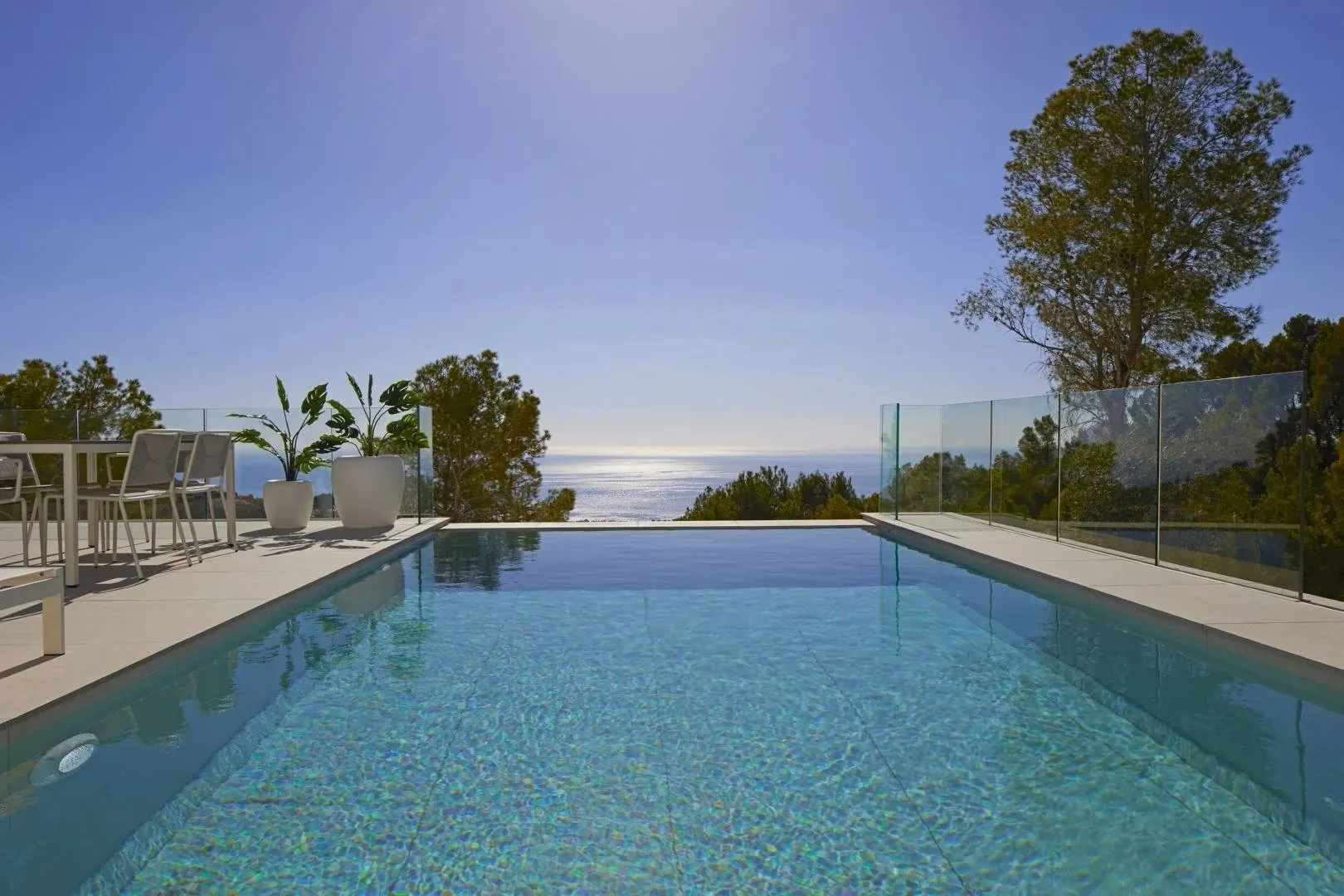
With this luxury villa in Altea architecture becomes more declarative.
The structure is composed in clear volumes, stacked and offset to maximise view and privacy simultaneously. Terraces project outward. The pool line extends towards the horizon, creating a visual continuity that is almost expected in this part of the coast, but not always achieved with restraint.
Here, the restraint is present.
Materials remain controlled. Light surfaces, but not overly bright. Glass, but not excessive. The result is a home that feels composed rather than performative.
Internally, the flow is direct. Spaces connect logically, which is particularly relevant for buyers who are thinking not just about personal use, but about hosting. Family, friends, extended stays.
There is also a sense of separation where needed. Bedrooms positioned for privacy. Circulation that avoids unnecessary overlap.
For Belgian buyers with a family focus, this kind of layout tends to resonate. It allows for shared spaces without sacrificing individual comfort.
Sublime Villa in Altea Hills
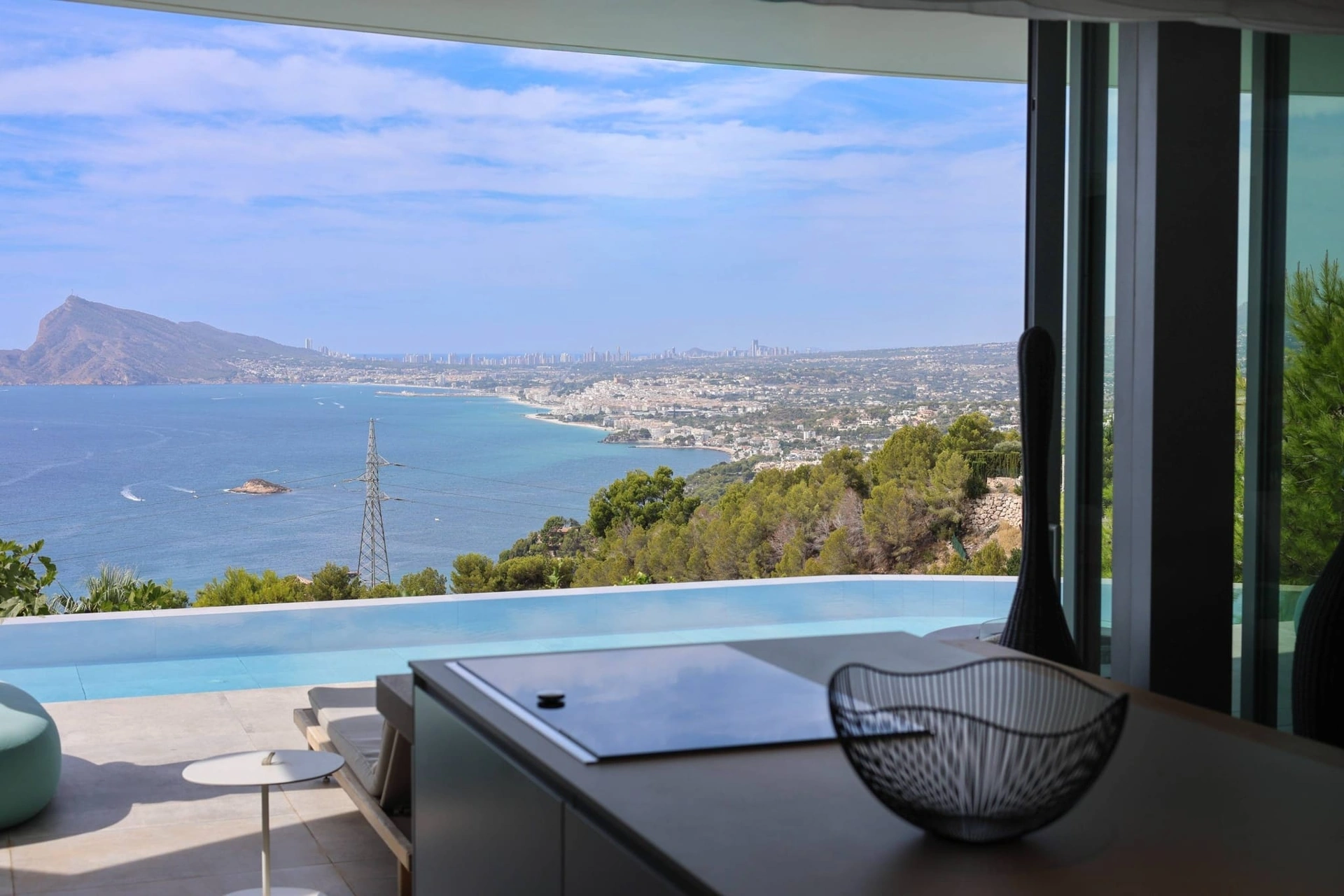
Altea Hills introduces another layer. Security, yes. But also a different kind of quiet.
Higher elevation. More distance between properties. A sense of enclosure without isolation.
This villa responds to that context with a more sculptural approach.
Volumes are sharper. Lines more defined. The house feels anchored into the hillside rather than placed upon it. Terraces cascade, but in a controlled sequence. Each level offers a slightly different perspective of the coastline.
What stands out is the way circulation is handled. Movement through the house is not purely functional. It is experiential. You arrive, descend, turn, and each shift reveals a new angle of the sea.
That might sound abstract, but in practice, it changes how the house is lived in.
There is also a stronger sense of privacy here. Not just visual, but acoustic. Something that becomes increasingly important for buyers who are dividing their time between multiple residences and expect consistency.
This is less about casual coastal living and more about a considered retreat. Structured, composed, and deliberately removed.
Calpe: Scale, Presence, and a More Direct Relationship with the Sea
Further south again, the landscape changes once more.
Calpe is more immediate. The Peñón de Ifach dominates the skyline. The coastline opens up. Views are broader, less interrupted. The town itself is more active, more visible.
For some buyers, that energy is a positive. For others, it requires a more carefully chosen location.
We have a number of luxury villas in Calpe including Villa Halley.
Within that, certain properties manage to create distance without losing connection.
Villa Halley, Calpe
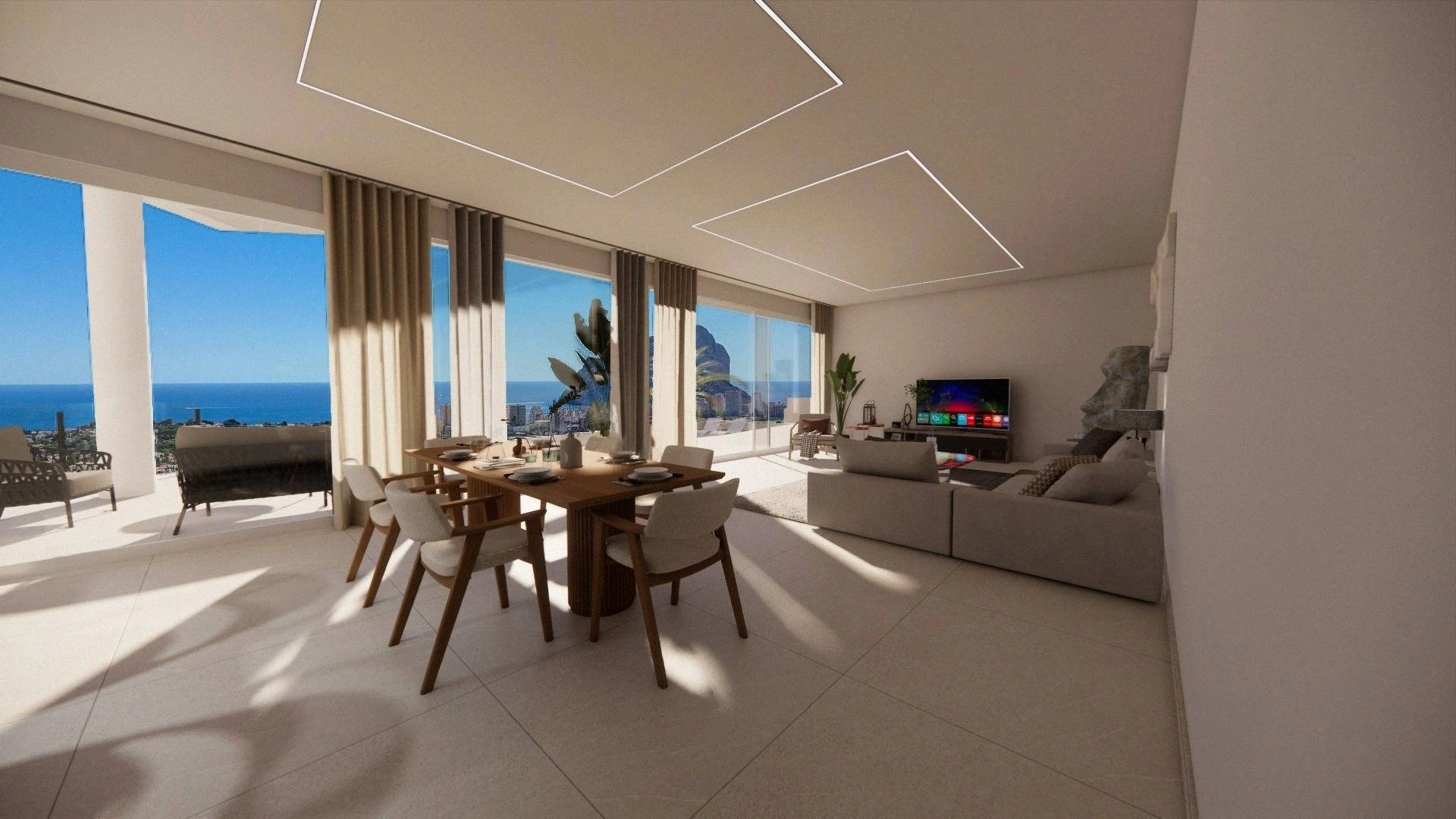
Villa Halley is where scale comes into play.
The views are wide, panoramic, extending across the coastline and towards the Peñón. The architecture responds by opening fully towards that horizon, but with enough structure to maintain a sense of proportion.
Large glass surfaces are balanced by solid volumes. Terraces are expansive, but not undefined. The pool acts as a central axis, drawing the eye outward.
What is particularly effective here is the layering of space.
Foreground, midground, horizon.
It creates depth, which is often missing in properties that rely purely on elevation.
Internally, the house supports both everyday living and larger gatherings. Spaces expand when needed, contract when not. That flexibility is not always visible in photographs, but becomes apparent in use.
For buyers considering long-term value, this kind of property tends to hold its position. Location, orientation, and scale align in a way that is difficult to replicate.
What Actually Differentiates These Homes
At a glance, they share the same headline. Sea views. Modern design. Prime locations.
But that is not where the real differences lie.
It is in how each property handles exposure. Wind. Light. Privacy. Access. The small decisions that shape daily life.
That is the part most people overlook.
A fully open façade might look compelling in winter. In August, less so. A terrace without protection may feel expansive on first visit, but rarely used in practice. A layout that works for a weekend can become frustrating over a month.
These homes avoid those issues. Not by accident, but by design.
Some lean towards openness. Others towards control. Some prioritise social spaces. Others privacy and retreat.
There is no single “best” option. Only the one that aligns with how you intend to live.
If you’re exploring sea view homes along the Northern Costa Blanca, it helps to look beyond the obvious. Orientation, privacy, and how a property sits within its landscape tend to reveal far more than photographs ever will.
If any of these villas resonate, or if you would prefer a more tailored selection aligned with how you intend to live here, you’re welcome to get in touch. We can guide you through these homes in more detail or introduce you to other considered properties across Jávea, Moraira, Benissa, Altea, and Calpe that may not yet be widely visible.
FAQs
1. Are sea view villas on the Costa Blanca a good long-term investment?
Properties with unobstructed sea views, strong orientation, and architectural coherence tend to show consistent demand. Their scarcity supports long-term value retention.
2. Which area is better for full-time living, Jávea, Altea, or Calpe?
Jávea offers a more balanced year-round lifestyle. Altea provides structure and elevation. Calpe suits those who prefer a more active coastal environment.
3. What should international buyers prioritise beyond the view?
Orientation, privacy, build quality, and legal readiness are critical. The view attracts attention, but these factors determine long-term satisfaction.
4. Are renovated villas as reliable as new builds?
When done carefully, renovations can offer strong value, especially in established locations. The quality of execution and structural integrity are key considerations.