
A Morning in Moraira: Living the Mediterranean Dream
There are places in the world where luxury shouts. And then there are places like Moraira, where it whispers—softly, steadily, through the rustle of pine trees, the texture of hand-plastered walls, the aroma of fresh coffee enjoyed in the shade of an old stone terrace.
For those who understand the value of light, silence, and well-proportioned spaces, Moraira offers a deeply considered version of Mediterranean living. It’s not performative. It’s not rushed. It’s a lifestyle defined by detail—where your morning ritual becomes your luxury.
This is what a morning in Moraira feels like—not just a schedule, but a sensory rhythm.
Slow Luxury: Morning Rituals
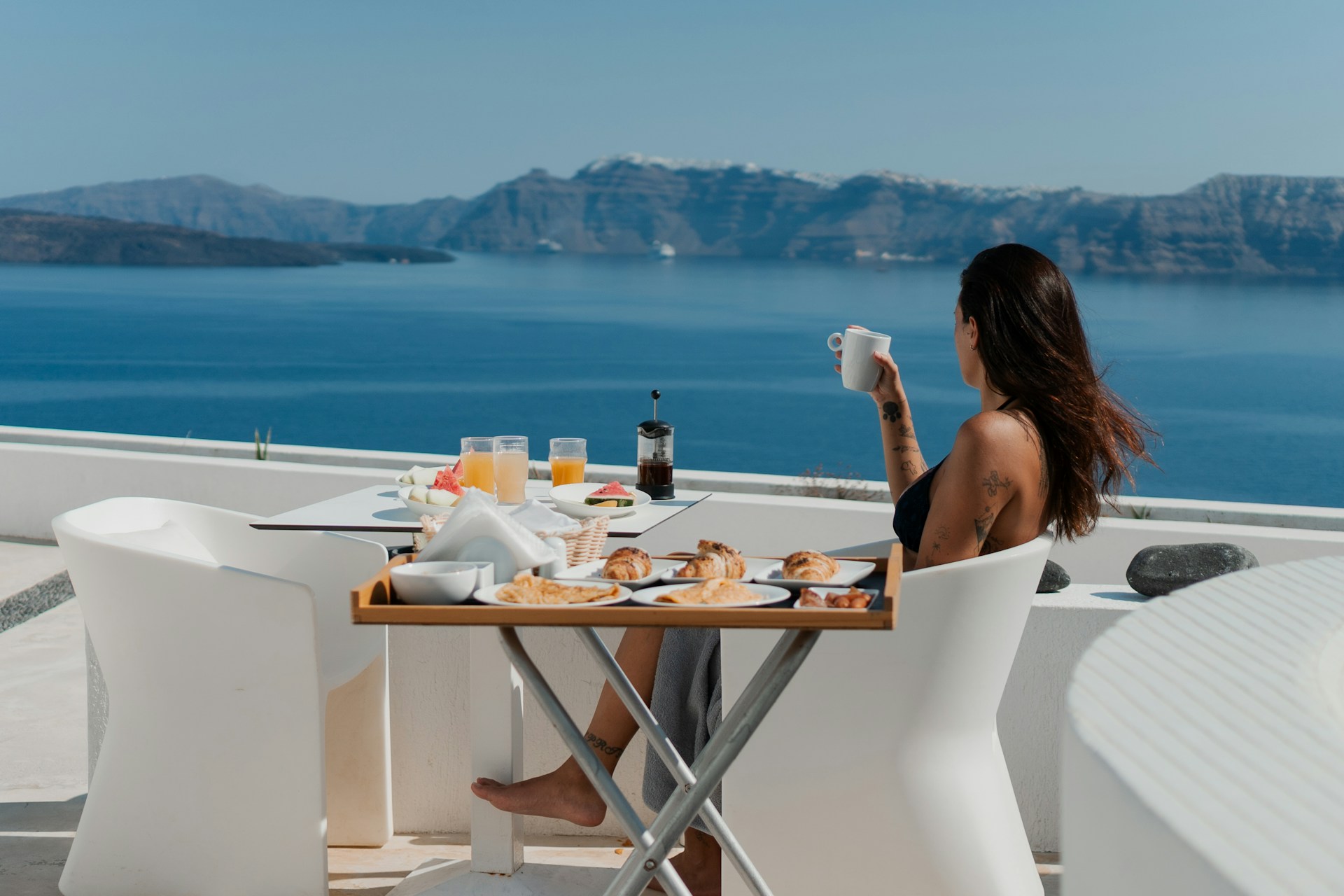
The first light arrives quietly over the Cap d’Or. You might notice it reflected on the terrace tiles before anything else—a subtle warm glow stretching toward the sea. If your home is well positioned (and many are), you’ll see the sun cut a soft line across the hills of Benimeit before it glints off the marina.
It’s a moment few people forget—the kind of sunrise that doesn’t demand attention, but earns it.
Mornings in Moraira begin slowly, intentionally. There’s no traffic hum, no corporate pulse. Instead, you might hear the soft sound of a moka pot on the stove, or the quiet creak of shutters being opened to let in the day.
Some walk—along the Paseo del Senillar, past the whitewashed villas and low garden walls. Others take to the sea early. Paddleboarders glide past El Portet before the sun gets too high. And always, a few early swimmers drift lazily across the bay, the water still flat from the night before.
Luxury here isn’t about labels. It’s about space. Time. Clarity.
And often, it’s about breakfast.
Locals will tell you the small rituals are what make mornings here feel anchored. The walk to Panadería hijos de Rafael (also known as the Forn de Pa i Dolços) or the queue at Forn Moraira for a loaf still warm from the oven. A cortado taken in the half café, half art gallery at Arte Sano, watching the world begin at its own speed.
This is slow luxury: the kind you live with, not show off.
The Art of Unhurried Living

It’s not just the pace that’s different in Moraira—it’s the permission it gives you to let go of urgency entirely.
The town’s layout invites wandering. You’ll rarely find sharp angles or hard lines. Streets curve gently, giving way to quiet plazas, shaded corners, and glimpses of the sea between buildings. Even the new architecture understands this rhythm. Modern villas with clean profiles still yield to the landscape: planted rooftops, low walls, Mediterranean xeriscaping (a landscaping approach focused on conserving water by minimizing irrigation needs through techniques like using drought-tolerant plants, efficient irrigation, and mulching) that blends rather than dominates.
In homes here, the boundary between inside and out is soft. Mornings flow from bedroom to terrace, from kitchen to poolside, without interruption. Large-format sliding doors disappear entirely. Breeze moves through linen curtains. Design is not for effect—it’s for feeling.
This, of course, is by intent.
Buyers from Northern Europe have shaped this market. They’ve brought with them a taste for thoughtful design and a reluctance for excess. What’s prized isn’t scale, but proportion. Cohesion. A natural material palette. Oak floors, microcement walls, considered lighting. And above all—flow.
It’s not just how the property looks. It’s how it lives.
And living well in Moraira means embracing unhurried days that begin not with tasks, but with atmosphere. You don’t need an itinerary. You need a seat in the shade, a newspaper, maybe a small bowl of cherries.
That’s the luxury.
Gastronomy, Design, and Community
As the morning unfolds, Moraira’s energy gathers—but never peaks. By 10:30 a.m., the old town is awake. The fish market hums quietly. Independent boutiques open their shutters. There’s always a breeze, even in summer.
For those who live here full-time, this is when community comes into focus.
A stop at the Friday market isn't just for produce. It’s for conversation—greetings exchanged in three languages, shared tips on which vendor has the sweetest tomatoes this week, a neighbourly wave from across the square. And if you’ve ever tried to park near the market after 9:45, you already know: you’re not the only one who values the routine.
And while Moraira is known for its gastronomic excellence—from understated bistros to the more elevated terraces of Le Dauphin or Casa Toni—it’s also a town that takes food personally. Everyone has their favourite bakery, their preferred shop for olive oil, the only butcher they’ll buy a chuletón from.
Design, too, is having a quiet moment here. Walk past any of the new villas near Camarrocha or Pla del Mar and you’ll see it: sculptural facades in neutral stone, corten steel gates, architectural landscaping that feels lifted from Ibiza’s northern coastline. Interiors are clean, tactile, and free of clutter. It’s not flashy—it’s fluent.
For the design-led buyer, Moraira’s appeal is especially sharp. It’s not a town caught up in heritage aesthetics or overworked "Spanish rustic." It offers modernity with soul.
But perhaps the most precious design element of all? The way life here is constructed around people, not cars or commerce. It’s a town scaled to the human pace. You can walk to lunch. You know your neighbour. Your morning begins not in motion, but in presence.
Moraira Beyond the Brochures
It’s easy to market Moraira: "charming fishing village," "crystal-clear coves," "gastronomic hotspot."
But to stop there would be to miss its essence.
Because beyond the photos and the guidebooks, Moraira is deeply lived-in. It's elegant without being exclusive. International, but not impersonal. A town that has protected its scale, resisted overdevelopment, and curated a lifestyle where success looks like slowing down—not speeding up.
Buyers often arrive expecting a holiday destination. What they find is something far more permanent: a sense of rhythm they didn’t know they were missing. Mornings that restore, not just entertain.
And it’s this lived quality that increasingly draws high-net-worth buyers from across Europe—not just for seasonal retreats, but for full-time life. Many arrive thinking they’ll spend summers here. Within two years, they’re here year-round.
Why? Because the Mediterranean dream, in Moraira, isn’t a sales pitch. It’s just… Tuesday morning.
You start with sea light on your walls. A ten-minute walk to the market. A long breakfast. And somehow, it feels like you’ve remembered something essential that urban life asked you to forget.
The Final Word: A Lifestyle, Not a Listing
If you’re looking at property in Moraira, you’re not just buying walls and windows. You’re buying into a tempo. Into light, community, ritual, space.
And while there are finer details to consider—orientation, legal readiness, materials, plot privacy—it’s often the intangible that makes the difference.
How it feels to wake up there. Whether the light hits the terrace just right. If the olive tree in the garden moves with the breeze in that quiet, stirring way.
This is where property becomes personal.
A morning in Moraira isn’t extraordinary in the cinematic sense. There are no private jets or paparazzi. But it is quietly perfect.
And for those who know how to recognise that kind of luxury, there may be no better place to begin the day.