
Benissa: large plots, absolute privacy, and long-term value
Benissa attracts buyers who prioritise space, privacy, and long-term stability over immediate visibility. Larger plots, controlled planning, and a more measured pace of development create a residential environment where homes sit comfortably within their surroundings rather than competing with them. Areas such as Racó de Galeno offer elevated views and architectural clarity, while Benissa Costa provides closer access to the sea without the density found in neighbouring locations. The result is a market shaped less by turnover and more by continuity, where ownership tends to be considered, and value is supported by land, regulation, and a setting that is unlikely to change in unpredictable ways.
Benissa as a deliberate choice
There is usually a point in a property search when the language begins to change. At first, buyers speak in broad terms because broad terms are enough. Sea views. Contemporary architecture. A short drive to the beach. A good orientation. Somewhere bright, somewhere calm, somewhere that feels recognisably Mediterranean from the first moment.
Then the search narrows, and with it, the questions become sharper.
How large is the plot, really, once the terraces, retaining walls, and circulation areas are taken into account? How exposed is the house from the road? What can actually be built on the surrounding land? Will those open views still feel open in ten years? How much privacy comes from architecture, and how much is already built into the site itself?
That is the stage at which Benissa begins to make sense in a different way.
It rarely dominates the first round of conversations. Buyers often start elsewhere, with a more obvious coastal name, somewhere better known internationally. Benissa tends to come into focus later, once the search becomes more exacting and the brief begins to reflect not just what looks attractive today, but what will continue to feel right after repeated stays, different seasons, and a longer horizon of ownership.
This is part of its character. Benissa does not rely on instant recognition. It asks for a more attentive reading than that. The reward is that once buyers understand it, they tend to understand it quite clearly.
What draws people here is not spectacle. It is proportion. Space around the house, not only inside it. Plots that still breathe. Access that feels discreet rather than exposed. A coastline that has not been overtaken by density. Planning rules that matter because they shape what ownership will feel like over time, not just on the day of purchase.
Benissa is not usually a spontaneous decision. It is a considered one.
Geography, scale, and why Benissa feels different
Benissa belongs to the Marina Alta, positioned between Moraira and Calpe, yet it maintains a distinct identity from both. That is partly a matter of geography, partly a matter of planning, and partly the result of how the municipality has developed over time.
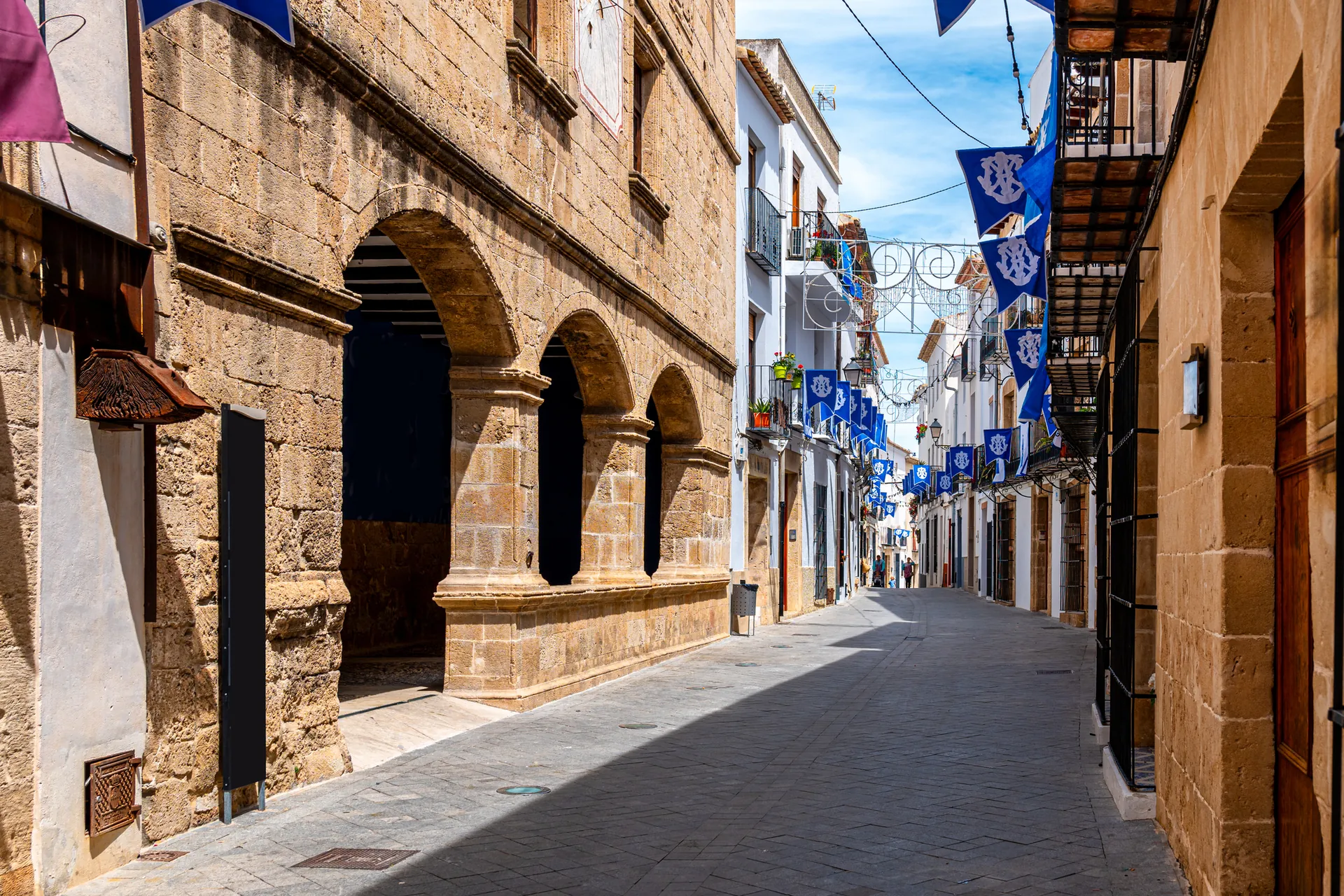
The area stretches from an inland historic town, with agricultural land and terraced countryside behind it, down to a relatively short but highly distinctive section of coastline known as Benissa Costa. This coastal strip is not extensive in length, but it has a strong physical definition. Rather than long sandy beaches lined with larger urban development, it is made up of rocky coves, pine-backed slopes, and residential enclaves that sit within the terrain rather than flattening it.
For buyers who know the Costa Blanca well, this difference is immediately relevant. Many coastal areas in Spain have developed through accumulation. One wave of construction followed another, and in too many cases the result is visual pressure, reduced plot sizes, and a gradual loss of the spatial quality that once made the setting attractive in the first place. Benissa followed a different path. Development came, certainly, but in a more controlled and less compressed form. The land still reads as land. Houses are still separated by meaningful distance in many of the better locations. The coastline still feels articulated rather than consumed.
The topography helps. The terrain is varied enough to create outlook, privacy, and layered views, but not so severe that building becomes awkward or over-engineered by default. Many plots sit on gentle slopes or naturally elevated ground, which allows architecture to open outward without forcing the site into submission. In practical terms, this means terraces sit better, access can feel more discreet, and visual overlap between neighbouring properties is often reduced from the outset.
This is one of the reasons Benissa tends to appeal to buyers who have already seen a number of options elsewhere. Once they begin comparing not just interiors but entire settings, the advantages become more obvious. The house is no longer assessed in isolation. It is assessed in relation to the plot, the street, the neighbouring land, the long view, and the likely future of the area around it.
Benissa rewards that kind of reading.
The real luxury here begins with the plot
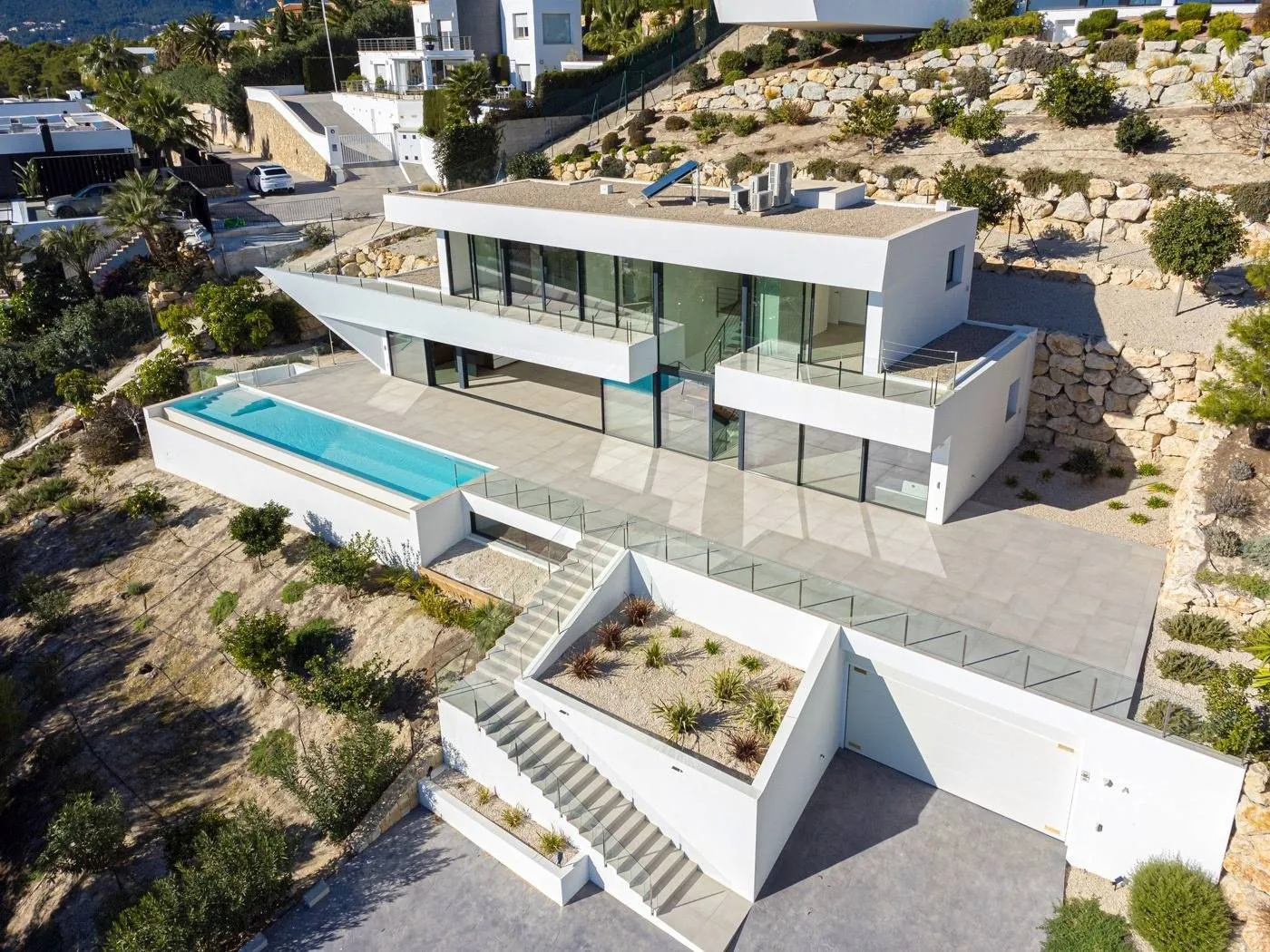
In Benissa, the decisive factor is often not the house alone but the land that frames it. This is where the municipality separates itself most clearly from denser coastal markets nearby.
In many parts of the Mediterranean coast, plot sizes have been reduced over time through subdivision and increasingly intensive development. A house may still be large, even architecturally impressive, but the experience of owning it is shaped by the fact that the surrounding land feels compressed. Terraces overlook other terraces. Pools align too neatly with neighbouring pools. Privacy depends on screens, walls, landscaping, and good intentions.
Benissa still offers something more stable than that, particularly in its higher-quality residential areas. Plots of 800, 1,000, or 1,500 square metres are not unusual, and in some cases the sense of space exceeds what the numbers alone suggest because the land is laid out in a way that supports separation and outlook rather than simply maximising building footprint.
That distinction matters. A generous plot is not only a technical feature on a listing. It changes how a house is entered, how it is lived in, and how it feels at different times of day. It allows the architecture to sit with more confidence. It creates distance from the road, which in turn improves discretion. It gives shape to gardens, terraces, shaded areas, and pool decks in a way that feels composed rather than squeezed in after the fact.
For families, larger plots often mean something straightforward and useful: children can move through the outdoor space without the house feeling like it begins and ends at the terrace edge. For buyers who entertain, it means open-air living can take place with genuine ease rather than with a constant awareness of proximity. For those buying primarily for retreat, it means the house is buffered by its own land.
There is also a long-term dimension to this. Land is one of the few things the coastal market cannot reproduce once it has been lost to density. A house can be renovated, extended, reconfigured, or completely redesigned. A plot that is already too tight remains too tight. Buyers with experience tend to recognise this quickly. When the setting is right, architecture has room to breathe. When it is not, even a very accomplished house can feel somehow compromised.
Benissa has retained enough spatial generosity that this remains one of its strongest qualities.
One of the clearer examples of how plot size shapes the experience can be seen in this new villa with sea views in Benissa. The house sits on a generous plot that allows the architecture to open fully toward the horizon while maintaining distance from neighbouring properties. Outdoor areas are not compressed into a single terrace but unfold across the site, with the pool, living spaces, and circulation working with the land rather than against it. This kind of layout creates a sense of calm that is difficult to achieve on tighter plots, where design often has to compensate for lack of space instead of simply responding to it.
Benissa Costa and the logic of living close to the sea
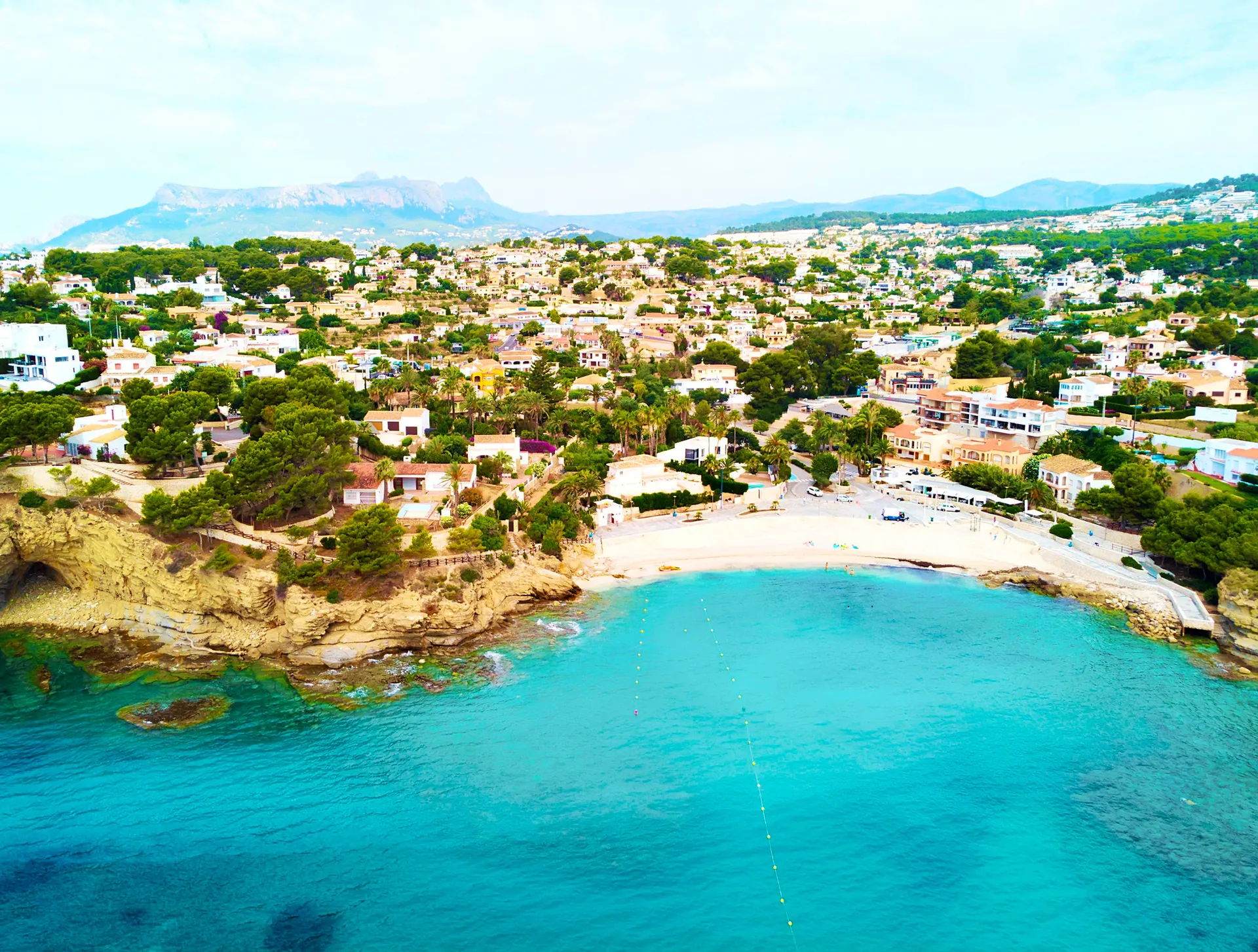
Benissa Costa is not a single atmosphere. It contains several, and the differences are worth understanding because they shape daily life more than buyers sometimes expect on a first visit.
What unites the coastal part of Benissa is the sense that the shoreline still has texture. The sea is approached through coves, small descents, curves in the road, and changes in level. This gives the area a more broken, intimate geography than one finds in more uniform beachfront zones. There is a physical relationship between house and coast that feels specific to each area rather than standardised across the whole strip.
La Fustera is often one of the first names buyers encounter. It has immediate appeal because the cove is accessible, the water is calm in many conditions, and the surrounding residential fabric is established enough to feel stable. Some properties here benefit from being able to combine a coastal address with a fairly manageable walk to the sea, which remains a meaningful advantage for buyers who intend to use the property regularly rather than simply as a statement location. The mood is more direct, more everyday. It can suit those who want the sea to remain part of daily routine rather than a distant visual asset.
Baladrar offers something slightly different. The coastline here feels more open and rockier in parts, with a stronger sense of being in contact with the natural edge of the land. Access patterns vary, and the housing stock can be more mixed, but for some buyers this is part of the appeal. It feels less curated, less uniform. The relationship to the sea is a little rougher, more specific to the immediate topography, and therefore more rewarding for those who prefer character over predictability.
There are also small pockets along Benissa Costa that do not advertise themselves strongly but reveal their quality through position, orientation, and calm. In those areas, what matters is often not a headline feature but the combination of several quieter ones: a low-traffic road, open sky from the terrace, enough distance from neighbouring buildings, easy movement to and from Moraira, and the knowledge that the area is mature enough to avoid unpleasant surprises.
Living near the sea in Benissa is therefore not just about having a coastal postcode. It is about choosing the form of coastal life that fits the way you intend to use the property. Some buyers want the water close at hand, even if that means accepting a little more seasonal movement around them. Others prefer to sit slightly above the coast, looking outward, trading absolute immediacy for more privacy and stronger long views. Benissa allows for both, and the decision is less about prestige than about rhythm.
Racó de Galeno and the appeal of elevation
If Benissa Costa offers contact with the water, Racó de Galeno offers control over the view.
This is one of the areas where Benissa’s advantages become particularly clear to buyers with a strong architectural eye. The terrain rises, the perspective widens, and the relationship between house and horizon becomes more composed. Properties here are often positioned in a way that gives them both greater outlook and greater privacy, simply because the land allows it.
What makes this part of Benissa so appealing is not elevation on its own. Height alone can create exposure just as easily as privacy if the planning is poor or the density too great. What Racó de Galeno offers, at its best, is a more disciplined combination of plot size, topography, and orientation. Houses can open toward the sea while remaining relatively protected from direct scrutiny. Terraces can face the view without feeling on display. Architecture can stretch horizontally and sit into the slope rather than trying to dominate it.
This has encouraged a certain type of property. Contemporary villas with clean lines work particularly well here, not because the area demands a single aesthetic, but because the sites favour architecture that understands light, platform, and proportion. Larger panes of glass make sense when there is something coherent beyond them. Broad terraces make sense when the landscape unfolds rather than crowds in. Infinity pools feel less like an affectation when they are aligned with a real sense of depth in the view.
For buyers from Belgium and the Netherlands, especially those drawn to design integrity and a more disciplined built environment, this part of Benissa can feel unusually persuasive. There is enough space for the architecture to have presence, yet the setting remains residential rather than theatrical. Even larger homes do not necessarily feel overstated because the surrounding land allows them to sit with more ease.
The other advantage is durability. Elevated plots in well-positioned parts of Racó de Galeno tend to offer views with a stronger degree of resilience, though that always needs to be assessed case by case. Where the topography and planning align well, the outlook has a better chance of remaining open in a meaningful sense. That matters for pleasure, obviously, but also for long-term value.
Privacy in Benissa is built into the territory
Privacy is one of the most overused words in luxury property marketing, largely because it can mean almost anything. In some cases it refers to nothing more than a high wall or a mature hedge. In others it depends on not looking too closely at the neighbouring house. Benissa offers a more convincing version of it because much of the privacy here does not have to be engineered after the fact.
Larger plots are part of this, but they are only part. The terrain also helps. Changes in level reduce direct sightlines. Houses often sit at slightly different elevations or orientations, which means terraces and outdoor spaces are not arranged in the repetitive way they can be in flatter, more tightly planned developments. Access roads are often quieter, and in good areas the entry sequence allows a sense of arrival without exposing the house immediately.
This creates a more settled form of privacy. It is not total seclusion in every case, nor does it need to be. What many buyers actually want is the ability to live, host, swim, dine outside, or simply spend time on the terrace without the awareness of being visually entangled with neighbouring routines. In Benissa, that is often achievable through the basic structure of the site rather than through defensive design.
There is also a social dimension, one that experienced buyers notice even if they do not always articulate it. Areas like Benissa attract residents who value a more contained, discreet style of ownership. The social atmosphere tends to reflect that. Houses are used. They are enjoyed. But there is less pressure toward visibility, less of the performative quality that can affect some higher-profile coastal enclaves. Privacy, in that sense, is reinforced not only by land and planning but by the kind of people who choose to be there.
For families, this can feel reassuring. For buyers who work at a high level and need to switch off properly when they are away, it can be decisive. For those advised by wealth managers or family offices, it often reads as a sign of maturity in the market rather than excess.
The practical outcome is simple enough. In Benissa, privacy is often part of the setting before the landscaping team arrives.
Open views, and the difference between a view and a durable view
Almost every high-end coastal market sells views. Far fewer protect them well.
In elevated areas, the topography itself does some of the work. When a plot sits above the land in front of it with enough margin, and when neighbouring plots are constrained in what they can build, the view has a stronger chance of remaining over time. In lower coastal positions, the reading becomes more technical. One has to understand what sits between the house and the sea, whether the land in front is already built, how the road network is arranged, what the planning parameters allow, and how the volumes of future construction might affect perception rather than just whether they appear literally in the line of sight.
This is where local knowledge matters. Buyers do not need general assurances. They need someone who understands not only the current property but the surrounding fabric and the likely future of the immediate area. A wide view today can lose much of its quality if a neighbouring development changes the sense of openness. Equally, a view that appears modest at first glance may in fact be one of the more stable ones because the land around it is already set in a way that limits future intrusion.
Well-positioned properties in Benissa benefit from the fact that the municipality has not pursued the kind of aggressive buildout that makes outlooks fragile. That gives buyers an advantage, but only if they assess carefully. The strongest properties here tend to combine outward orientation with a setting whose logic is readable. When that is the case, the view becomes more than a visual selling point. It becomes part of the long-term character of the property.
Planning discipline, and why it matters more over time than on day one
Planning rules are rarely the part of a viewing that excites buyers most, yet they shape the long-term quality of ownership more than many cosmetic features ever will. Benissa has an advantage here because the municipality has preserved a degree of urban discipline that still affects how its best residential areas feel.
This is not glamorous material, but it is the sort of thing that serious buyers come back to. Plot occupancy, height restrictions, buildable volume, setbacks, and local conditions of development all influence the experience of space, light, and privacy. In places where those rules are either weak or inconsistently applied, value can be diluted gradually. A neighbouring plot is redeveloped more intensively than expected. A calm access road becomes visually busier. What seemed special begins to feel less so, and the erosion is often silent rather than dramatic.
Benissa has benefited from not pushing density too far. This gives the municipality a more stable residential character. Buyers may not discuss volumetric allowances over lunch, but they notice the result when they drive through the area. The streets feel less pressured. Houses sit more comfortably. There is less of the compressed, overbuilt atmosphere that undermines long-term appeal in other parts of the coast.
For international buyers, especially those used to more regulated environments in Northern Europe, this often feels reassuring. There is a sense that the municipality understands that its value lies in what has been preserved as much as in what has been built. That is a subtle but meaningful distinction.
It also has direct implications for capital preservation. Homes that sit within a coherent planning framework tend to hold their appeal better because the qualities buyers are paying for are less likely to be compromised by uncontrolled change nearby. This is rarely the sole reason for buying in Benissa, but it becomes one of the reasons owners remain satisfied with the decision years later.
A house can be redesigned. The character of an area is much harder to recover once it has been diluted. Benissa has, to a considerable extent, protected its own.
Access without exposure
Access is an underrated part of residential quality, largely because it is easy to overlook during a short viewing. Buyers focus on the arrival image, the view, the living room, the pool terrace. What tends to register later, after repeated use, is whether coming and going feels discreet or overly visible.
Benissa performs well here in many of its better pockets. Roads are often calmer than in more centralised resort environments. Approaches can feel residential without becoming suburban. The best properties benefit from entry points that are slightly set back, shielded by the land, or arranged in a way that creates a sense of transition between public road and private house. That matters far more than many people expect.
A discreet arrival changes the whole tone of ownership. It affects how the house is used, how comfortable guests feel, how relaxed a family feels about spending time outdoors, and even how practical the property becomes for longer stays. When access is poorly handled, the sense of exposure does not disappear simply because the view is good. It lingers.
In Benissa, there are many homes where the sequence works better. One turns off a relatively quiet road, passes through a gate or into a forecourt, and only then begins to experience the house properly. This gives the property a degree of composure. It also protects the everyday. Deliveries, arrivals, departures, family routines, weekends with guests, all of this happens more smoothly when the house is not immediately on display.
This is particularly relevant for buyers who split time between Spain and elsewhere. A second or third home should not require psychological adjustment each time one arrives. The best properties make it easy to exhale on entry. Benissa, thanks to plot depth and the way many sites are arranged, often allows for exactly that.
Architecture in Benissa, and what the land encourages
Benissa does not impose a single architectural language, but the better sites encourage a particular kind of clarity. Larger plots, open orientation, and more generous spacing between homes mean architecture can afford to be less defensive and more resolved.
This is one reason contemporary villas often work very well here. The land allows long horizontal lines, clearer internal circulation, and living spaces that flow outward without immediately colliding with the next property. Terraces can be broad rather than token. Pool decks can feel anchored rather than inserted. Outdoor kitchens, shaded dining areas, and transitional covered spaces become genuinely useful, not just decorative extras for photographs.
At the same time, traditional Mediterranean houses can also make sense in Benissa, especially where they respond properly to the climate and the terrain. Thick walls, covered terraces, textured materials, and established planting can feel deeply appropriate here when the proportions are right. The issue is rarely style alone. It is whether the house understands its plot.
Because the land often gives more room to work with, design errors become more visible too. A house that ignores access, orientation, or the way the plot falls away will feel unresolved regardless of how expensive the finishes may be. Benissa tends to reward projects that pay attention. Architecture has to engage with the site, not simply sit on it.
For design-led buyers, this is part of the appeal. There is enough freedom in the better plots to produce something coherent and highly personal, but enough structure in the area to avoid the visual chaos that can undermine more permissive markets. One sees homes with strong architectural ambition here, yet the setting remains residential and believable.
That balance matters. Luxury becomes less convincing when every house feels as if it is trying to outstate the last one. In Benissa, the best properties tend to have confidence without strain.
Who buys in Benissa, and why they stay interested
The buyers who respond most strongly to Benissa are often those who have already refined their brief beyond the obvious. They may have begun by looking in Moraira, perhaps because of walkability and established prestige, or in Altea, because of architecture and cultural depth, both of which come through clearly in the earlier guides you shared . Over time, though, they realise they are asking for something slightly different.
They want more land around the house. They want better privacy without losing the sea. They want a setting that feels residential rather than performative. They want to understand what the area will still feel like after the first excitement of acquisition has passed.
Benissa suits that progression well.
Belgian and Dutch buyers often connect with it because there is a familiar respect for planning discipline and spatial order. Family buyers see the appeal of larger plots and calmer access. Design-minded couples are drawn to the better elevated sites because they allow architecture and outlook to work together. Investors with a long horizon, or advisors acting on behalf of clients, tend to appreciate the municipality’s relative scarcity, controlled build environment, and more resilient sense of value.
This is not a market built on constant churn. It is not driven by the same level of visible turnover as some neighbouring areas. For many owners, that is part of the attraction. Homes are bought with intention and often held for longer periods. The social atmosphere reflects that. Benissa tends not to feel overly transient, even though many properties are second homes or part-time residences. There is enough continuity in ownership to support stability, and enough international presence to make the market sophisticated without losing local texture.
People stay interested in Benissa because it does not exhaust itself quickly. The qualities that attract buyers at the start, land, privacy, planning, outlook, are the same qualities that continue to matter later.
Living between coast and interior
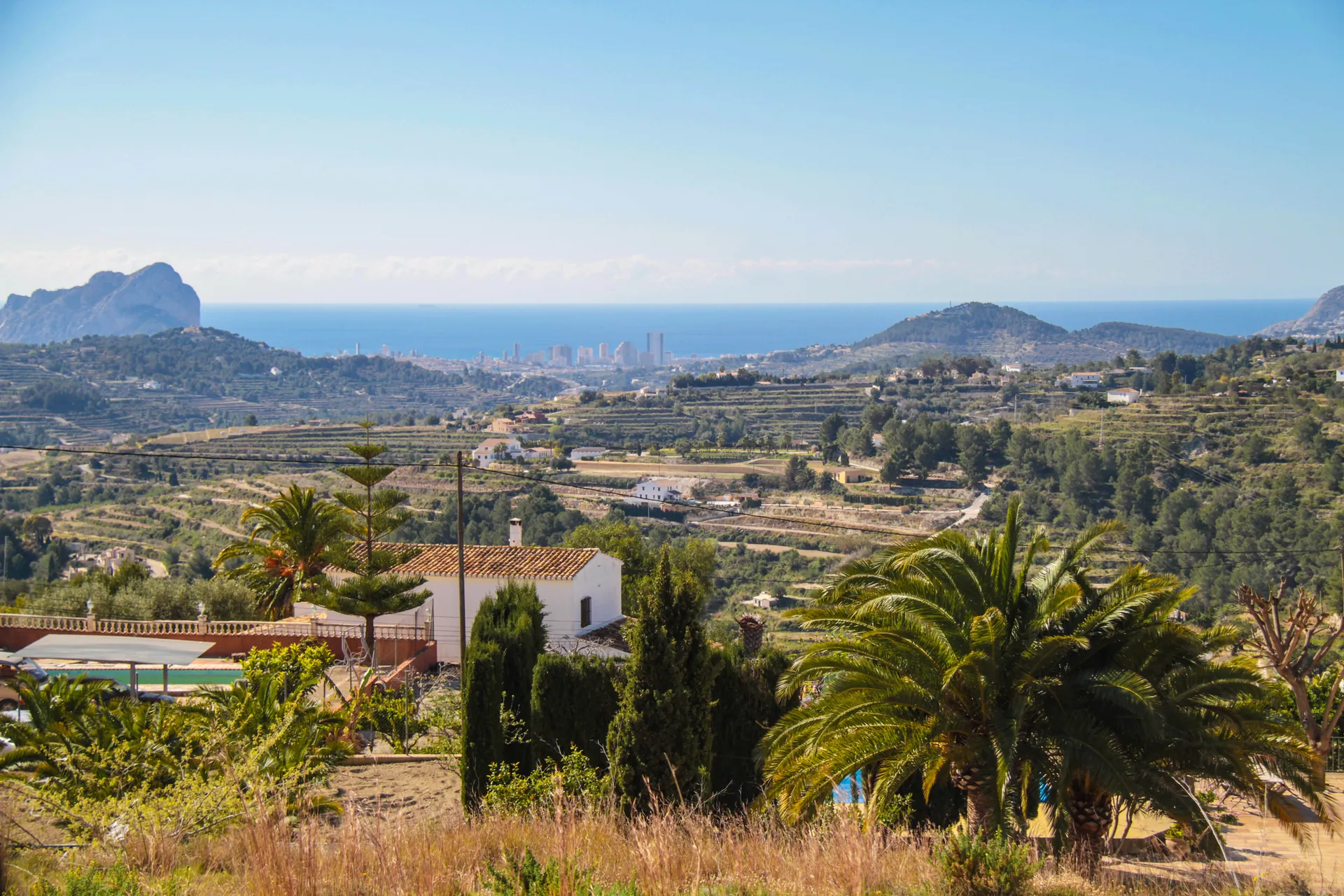
One of the subtler advantages of Benissa is that life here does not depend entirely on a single coastal strip. The municipality has depth behind the shoreline, and that affects how ownership feels.
The coast provides access to the sea, coves, sunlit terraces, and the familiar rhythm of Mediterranean outdoor life. Yet the historic town inland, along with the surrounding countryside, gives Benissa a second register. There is another pace available. Another texture. Ownership does not feel confined to one narrow band of summer geography.
This matters more than many buyers expect, particularly those planning longer stays. The ability to move between the sea, the inland town, nearby Moraira, and the wider Marina Alta creates a more rounded pattern of living. One can swim in the morning, have lunch or errands inland, spend the afternoon at home, and dine in a neighbouring coastal town without feeling trapped inside one fixed resort ecosystem. The area opens out in several directions.
For some owners, this distributed quality is exactly what keeps Benissa engaging. It does not funnel all life into one promenade or one centre. It gives options without creating sprawl. That can be especially attractive to buyers who already know the Mediterranean and do not need constant programmed activity to feel that a place is working.
It also softens seasonality. In high summer, the coast is naturally more animated. Outside those months, the wider territory around Benissa allows daily life to remain more complete. This can make the area feel more substantial as a long-term base, even for owners who initially buy as seasonal residents and only later begin to extend their stays.
Long-term value, and why Benissa holds its ground
Long-term value in property is rarely created by excitement alone. It comes from a combination of scarcity, coherence, and the ability of a place to protect the qualities that made it desirable in the first place. Benissa performs well on all three.
Scarcity exists here in a practical sense. The coastline is limited. The better plots are limited. Elevated positions with strong outlook and good privacy are limited. Large plots close enough to the sea, but not trapped by density, are increasingly difficult to replicate anywhere on the Mediterranean. Once those conditions are largely built out, the municipality cannot simply invent more of them.
Coherence matters just as much. Benissa benefits from having developed in a way that still allows the area to feel legible. The relationship between road, plot, house, and landscape remains more balanced than in overbuilt locations. Buyers may not use the word coherence when they are describing what they like, but they respond to it instinctively. It makes an area easier to trust.
Then there is protection. Planning discipline, plot depth, and the physical shape of the land all contribute to a sense that what one is buying has a better chance of remaining itself. That does not mean the market is static. Good markets should evolve. But there is a difference between evolution and dilution, and Benissa has, on the whole, avoided the latter more successfully than many coastal municipalities.
For buyers thinking in decades rather than seasons, this becomes persuasive. The argument for Benissa is not that it will chase the loudest trends or reinvent itself repeatedly. The argument is that it retains a residential quality that sophisticated buyers continue to value, and that this quality is rooted in conditions that are hard to manufacture artificially.
Is Benissa right for every buyer
It is not.
Buyers who want to walk everywhere may prefer a more compact coastal centre. Those seeking a stronger social scene, more visible activity, or a highly animated beachfront environment may find Benissa too measured. It asks for a certain appreciation of space, distance, and understatement. The rewards are substantial, but they are not always immediate in the way more overtly glamorous destinations can be.
Then again, many of the buyers who choose Benissa are relieved by exactly that. They do not need a place to perform luxury back to them every day. They want a property that feels settled, protected, and convincing. They want the quality to be in the plot, the privacy, the way the house sits in the land, and the fact that the surrounding area is unlikely to drift in the wrong direction.
For families, Benissa can work extremely well when the priority is room to breathe and a calm residential atmosphere. For design-led buyers, the stronger sites allow architecture to express itself more fully because the land supports it. For investors or advisors, the municipality offers a rational story about value, one based on scarcity and planning rather than hype. For part-time residents who may later become longer-term owners, it offers a way of living that can expand naturally over time.
The right buyer for Benissa is usually not looking for the loudest destination on the map. They are looking for the place that continues to make sense once the obvious criteria have already been met.
Choosing Benissa with context
Benissa offers a version of the Costa Blanca that feels more protected, more spacious, and more stable than many of the alternatives buyers compare it with first. The coastline remains attractive, but the deeper appeal lies in what happens behind the façade of a listing. The land around the house. The silence around the terrace. The confidence that comes from understanding the planning. The ease of arriving without being overexposed. The sense that ownership here is grounded in something more durable than first impressions.
For buyers from Belgium and the Netherlands, for families planning carefully, for design-conscious owners who care about proportion, and for advisors whose role is to look past immediate charm toward long-term quality, Benissa often stands up extremely well.
That is why it so often becomes the place people choose after they thought they were looking elsewhere.
To explore current properties in Benissa, Grupo Garcia’s selection can be found here: property for sale in Benissa
If you are considering Benissa, the next step is rarely just to arrange a viewing. It is to understand which plots offer real privacy, which views are likely to remain open, and which areas best match the way you want to live. Grupo Garcia can guide that conversation with local knowledge, discretion, and a clear understanding of what matters over time. To speak with the team or arrange a private consultation, contact Grupo Garcia.
FAQs about buying property in Benissa
What makes Benissa different from Moraira or Jávea?
The difference usually becomes clear once buyers begin comparing more than location alone. Moraira offers walkability and a compact coastal centre, while Jávea provides scale and variety across several distinct zones. Benissa sits slightly apart, with a stronger emphasis on larger plots, lower density, and a more controlled built environment. The result is a setting that feels less compressed, with greater privacy and a clearer sense of long-term stability.
Are plots in Benissa really larger than in other coastal areas?
In many cases, yes. While this depends on the specific area and property, Benissa has retained a higher proportion of plots in the 800 to 1,500 square metre range, particularly in its more established residential zones. Just as important as the size is how the land is used, allowing houses to sit within the plot rather than filling it, which improves privacy and outdoor living.
Which areas of Benissa are best for sea views?
Elevated areas such as Racó de Galeno tend to offer the most open and far-reaching views, often with greater long-term resilience due to the topography. Along Benissa Costa, views can be closer and more immediate, but they require more careful assessment in terms of what may be built nearby. The quality of a view depends not only on what you see today, but on how protected that outlook is over time.
Is Benissa a good choice for year-round living?
For buyers seeking a quieter, more residential environment, Benissa works well beyond the summer months. While it does not have the same centralised activity as some coastal towns, it benefits from proximity to Moraira, Calpe, and the wider Marina Alta, which provide services, restaurants, and daily infrastructure throughout the year. Many owners begin with seasonal use and gradually extend their stays.
How important is planning regulation in Benissa?
Planning regulation plays a significant role in shaping the area. Controls on build size, height, and density help preserve the relationship between properties and their surroundings, which in turn supports privacy and protects views in better-positioned locations. For buyers thinking long-term, this level of control can be as important as the property itself.
Can you walk to the beach from properties in Benissa?
Some areas of Benissa Costa, such as La Fustera, offer properties within walking distance of the sea, although this varies depending on the exact location and elevation. In higher areas, including Racó de Galeno, access typically requires a short drive, but this is often balanced by greater privacy and wider views. The choice depends on whether daily proximity or spatial separation is the priority.
Is Benissa suitable for families?
Benissa appeals to families who value space, privacy, and a calmer environment. Larger plots allow for more flexible outdoor use, and the surrounding area offers access to international schools, healthcare, and year-round amenities within a short drive. It is less about immediate convenience and more about creating a stable and comfortable base.
Does Benissa hold its value over time?
Properties in Benissa tend to benefit from limited supply, controlled development, and a buyer profile focused on longer-term ownership. While no market is static, these factors support a more stable environment where value is linked to land, location, and planning rather than short-term trends. Well-positioned properties, particularly those with strong plots and protected views, tend to remain consistently in demand.